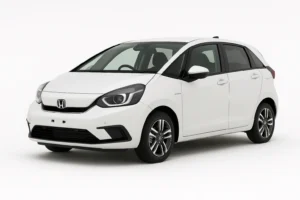
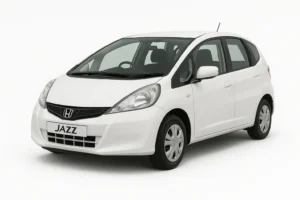
This is the single most important thing on this page, and it is where most enquiries go wrong before they start.
Honda has sold two completely different hybrid Jazz models in the UK. They use different hybrid architectures, different battery chemistries, different voltages, different fault codes and different service procedures. Searching for “Honda Jazz hybrid battery” and ordering the first thing that appears is how people end up with a part that will never fit their car.
| 2011 to 2015 Jazz Hybrid | 2020 to 2025 Jazz 1.5 e:HEV | |
|---|---|---|
| Hybrid system | IMA, Integrated Motor Assist | e:HEV, two-motor full hybrid |
| Number of electric motors | One | Two |
| Battery chemistry | Nickel metal hydride | Lithium-ion |
| Pack voltage | 100.8 V nominal | Lithium-ion, higher voltage |
| Engine | 1.3 litre i-VTEC | 1.5 litre DOHC i-VTEC |
| Can it drive on electricity alone? | No, assist only | Yes, in EV Drive |
| Transmission | CVT | Single fixed gear ratio, no conventional gearbox |
| Fault codes | IMA code set | Separate e:HEV code set |
The 2011 to 2015 car uses Integrated Motor Assist, the system Honda carried over from the Insight. A single thin electric motor sits between the engine and the transmission, bolted to the crankshaft, and it does several jobs at once: it assists the petrol engine under acceleration, it acts as the generator under braking, and it replaces the alternator entirely.
That last point surprises owners. There is no separate alternator on an IMA Jazz. The hybrid system handles charging the low-voltage electrical system, so a hybrid fault here eventually shows up as a Jazz that simply will not start one morning.
IMA cannot move the car on electricity alone. It is an assist system, not an electric drive system. A Jazz Hybrid of this generation always has the petrol engine running when the car is moving.
The 2020 to 2025 car is a different machine entirely. Honda’s e:HEV uses two electric motors and a 1.5 litre petrol engine, with a combined system output of 109 PS (80 kW). The propulsion motor spins to 13,300 rpm and produces up to 253 Nm of torque.
There is no conventional gearbox. Honda uses a single fixed gear ratio with a lock-up clutch, which it describes as more compact and more refined than the planetary eCVT used by most rivals.
The car moves between three modes on its own:
Around town the car mostly alternates between EV Drive and Hybrid Drive. Honda’s engineering target was that occupants should not be able to feel the handover.
So the petrol engine on an e:HEV Jazz is often not driving the car at all. It is frequently acting as a generator. This matters for diagnosis, because an engine that runs at a speed unrelated to road speed is normal behaviour on this car and alarming behaviour on almost any other.
The Honda Jazz hybrid battery fitted to the 2011 to 2015 car is a nickel metal hydride pack, and NiMH batteries fail in a recognisable sequence rather than all at once. These are the symptoms of a failing Jazz hybrid battery, roughly in the order owners report them.
Fuel economy slipping first. The earliest sign that a Honda Jazz hybrid battery is losing capacity, and the one most often dismissed. The same commute returning noticeably less than it used to, with no change in route, load or season.
The battery charge gauge swinging. A healthy Jazz IMA battery sits in a band around the middle of the gauge and moves smoothly as it charges and discharges. A worn hybrid battery charges to full in a very short distance, dumps to empty under light load, then refills. The gauge travels the whole scale instead of hovering. This happens because the cells have lost usable capacity, so the same amount of energy now moves the needle much further. It is the most reliable Honda Jazz hybrid battery symptom there is, and it usually appears before any fault code sets.
Assist disappearing. Noticeably weaker acceleration pulling away from a junction or joining a dual carriageway, because the hybrid battery can no longer deliver the assist the system is asking for.
Stop-start becoming unreliable. The engine no longer shutting off at lights, or shutting off and restarting almost immediately. Auto Idle Stop depends on the hybrid battery holding enough charge to restart the engine, so it is one of the first functions to go.
The engine running more than it used to. Including at higher revs while stationary, apparently charging the battery for no reason. The control module runs its calibration routines more often because its stored map of the hybrid battery keeps proving wrong.
The Jazz hybrid battery cooling fan becoming audible. Covered in its own section below.
Charging problems in the low-voltage system. Because IMA replaces the alternator, a failing Honda Jazz hybrid battery eventually shows up as a car that will not start. Owners often chase this as a separate electrical fault for months before anyone tests the hybrid battery.
Different battery chemistry, different symptoms. Everything written about diagnosing an IMA Jazz hybrid battery stops applying here.
Reduced electric running. The clearest early sign of a weakening Jazz e:HEV hybrid battery is that the car spends less time in EV Drive than it used to. A journey that used to run silently for the first stretch now fires the engine almost immediately, because the battery is holding less.
The engine running at odd times. Tricky to read, because on this car the engine running at a speed unconnected to road speed is normal. What is not normal is the engine running more or less constantly in conditions where it previously did not, which usually means the hybrid battery is no longer carrying its share.
Fuel consumption rising. The official WLTP figures are 4.5 l/100 km for the standard Jazz and 4.8 l/100 km for the Crosstar. A car drifting well away from its own established average is worth having the hybrid battery checked on.
Reduced performance under load. The propulsion motor contributes up to 253 Nm, and it draws that from the hybrid battery. When the battery cannot supply it, overtaking and motorway merging feel flat.
Hybrid battery warning lights. Covered below.
Lithium-ion does not fail like nickel. A Jazz e:HEV hybrid battery does not develop the dramatic full-to-empty gauge swing that defines a failing IMA pack. Lithium battery degradation is quieter and far more gradual, and it shows up as lost capacity rather than erratic behaviour. The absence of a dramatic symptom is not the absence of a hybrid battery problem.
This is the most neglected maintenance item on the 2011 to 2015 car, and neglecting it shortens Honda Jazz hybrid battery life directly.
Cooling for the IMA battery comes from the cabin itself. A fan pulls interior air along a duct, through a filter element, and across the battery cells at the back of the car.
Whatever ends up in the cabin ends up in that filter: carpet lint, dust, grit tracked in on wet shoes, a decade of British winters driven with the windows shut. When the intake clogs, airflow across the battery falls, the pack operates above the temperature it was designed for, and sustained heat is the principal thing that degrades nickel metal hydride cells.
The fan compensates by spinning harder and for longer, so a Honda Jazz hybrid battery cooling fan you can suddenly hear from the driver’s seat is reporting a problem, not developing a personality.
Two practical points:
Get the intake and filter looked at any time the hybrid battery is being inspected. Minor work set against the cost of what it keeps cool.
If previous work left the ducting cracked or disconnected, a replacement Jazz hybrid battery will run in exactly the thermal conditions that ended the last one and will age on the same schedule. The ducting is a functional component, not interior trim. Owners who conclude that replacement hybrid batteries do not last are very often describing a cooling path nobody addressed.
The e:HEV car manages its battery temperature differently, so this section does not apply to the 2020 to 2025 vehicles.
Jazz owners search for what the hybrid battery symbols mean more than almost anything else, and the handbook does not make them obvious.
The IMA indicator, 2011 to 2015. An amber light reading IMA. It means the hybrid control unit has logged a fault code. It is not a verdict on the hybrid battery either way. It reports only that something has been stored and wants reading, and some IMA codes point at sensors, connectors or control modules rather than at the battery itself.
The hybrid battery charge gauge. Not a warning light, but the most informative display on the car. Watched over a week of normal driving it says more about Honda Jazz hybrid battery health than any single lamp. See the swing behaviour described above.
The assist and charge bars. These show the hybrid battery assisting or recharging. A car that never shows assist, or never shows charge going back in under braking, is telling you something about the battery.
The check engine light. On a hybrid Jazz this can be triggered by hybrid battery faults as well as conventional engine faults. On these cars the two systems are not separate.
The power meter on the e:HEV, 2020 to 2025. Shows where energy is going. The useful observation is not any single reading but the proportion of a journey spent running on the battery, tracked over time.
A general hybrid system warning on either car means the same thing: a code is stored, and guessing at the cause from the symbol alone is not a hybrid battery diagnosis.
Worth being precise about, because getting this wrong sends people down the wrong path entirely.
Codes that usually mean the Honda Jazz hybrid battery itself needs replacing:
| Code | Meaning |
| P0A7E | IMA battery module deterioration |
| P0A7F | Hybrid battery pack deterioration |
| P1435 | Battery module temperature or condition fault |
| P1446 | Battery module individual voltage fault |
| P1570 | IMA system fault |
Codes that may or may not call for a replacement hybrid battery, depending on what testing shows:
| Code | Meaning |
| P1447 | Battery module deterioration, detected during charge |
| P1449 | Battery module deterioration, detected during discharge |
| P0A9D, P0A9E | Battery temperature sensor circuits |
| P0AC7 | Battery current sensor circuit |
| P0ACD | Battery voltage sense circuit |
| P1574 | Battery condition monitor fault |
| P0A27 | Battery current sensor range or performance |
| P0AE1 | Battery module cooling system fault |
| P1600 | IMA control unit communication fault, usually a module or connector |
P1447 and P1449 belong to the IMA nickel metal hydride battery generations only. They do not apply to Honda’s later two-motor lithium-ion hybrid batteries, and that includes the 2020 to 2025 Jazz e:HEV.
If a workshop quotes you a P1447 or P1449 on a 1.5 e:HEV, something is wrong with the diagnosis, the code reader, or the information they are working from. It is a useful test of whether whoever is looking at your car understands which hybrid battery is in front of them.

Cover |
Term |
Extendable to |
| Standard vehicle warranty | 3 years or 90,000 miles | 8 years or 100,000 miles with authorised servicing, vehicles registered from 1 April 2026 only |
| Specified hybrid system components, e:HEV and e:PHEV | 5 years or 90,000 miles | 8 years or 100,000 miles with authorised servicing, vehicles registered from 1 April 2026 only |
| Electric powertrain defects, e:HEV and e:PHEV | 5 years or 90,000 miles | 8 years or 100,000 miles with authorised servicing, vehicles registered from 1 April 2026 only |
| High-voltage battery capacity guarantee, at least 70% of original capacity | 8 years or 100,000 miles | Applies to e:PHEV and BEV models |
No 2011 to 2015 Jazz hybrid battery is still in Honda cover. The newest car in that range is eleven years old. There is no in-service date that leaves one inside any Honda term, which is why replacement is the only route for the IMA generation.
Every 2020 to 2025 Jazz e:HEV has a hard five-year limit on its hybrid cover. Honda’s hybrid component and electric powertrain terms both run 5 years or 90,000 miles, whichever comes first. A 2020 car passed five years in 2025. A 2021 car passes it this year.
The eight-year extension does not apply to your Jazz. Honda’s extended cover is a Service Activated Warranty, and its terms limit it to non-commercial vehicles registered from 1 April 2026. Every Jazz in the 2020 to 2025 range was registered before that date. Main dealer servicing does not change this, because the car falls outside the eligibility window rather than failing a servicing condition.
The 70% capacity guarantee is for a different kind of car. Honda’s promise that the high voltage battery will hold at least 70% of its original capacity for 8 years or 100,000 miles applies to e:PHEV and BEV models. The Jazz e:HEV is a full hybrid, not a plug-in, so its hybrid battery sits under the five-year hybrid component terms instead. Owners who have read about Honda’s 70% battery promise and assumed it covers their Jazz hybrid battery are reading about a different category of vehicle.
So a 2020 or 2021 Jazz e:HEV with a failing hybrid battery is outside Honda cover with no route to extend it. If you are unsure where your car sits, its registration date is the document that settles it.
The IMA battery, 2011 to 2015. Most of these packs reach somewhere between 8 and 12 years. Every Jazz hybrid battery in that range is now past the lower end of that band, and the newest is eleven years old. Some are still working. Many are not, and the symptom list above is how you tell which you have.
The e:HEV battery, 2020 to 2025. Too early for a settled UK field record, and anyone quoting you a confident Honda Jazz hybrid battery lifespan for this generation is guessing. Lithium-ion batteries in full hybrids cycle shallowly rather than deeply, which favours longevity. The earliest cars are only now reaching the age where meaningful data starts to exist.
Regular use including longer runs, a clear battery cooling path on the IMA cars, and not leaving the vehicle standing for months at a time.
| Specification | Detail |
| Hybrid system | Integrated Motor Assist, single motor |
| Battery chemistry | Nickel metal hydride |
| Nominal battery voltage | 100.8 V |
| Cell construction | 1.2 V cells in series |
| Engine | 1.3 litre i-VTEC |
| Battery location | Rear of the vehicle |
| Battery cooling | Cabin air, fan drawn, filtered |
| Electric-only driving | None, assist only |
Honda’s own European hybrid documentation describes the high-voltage battery across its pre-2013 range as a nickel metal hydride module built from 1.2 volt cells, totalling between 100 and 160 volts depending on model, with the battery box located in the rear of the vehicle. The Jazz hybrid battery sits at the bottom of that voltage range.
| Specification | Detail |
| Hybrid system | e:HEV, two motors |
| Battery chemistry | Lithium-ion |
| Engine | 1.5 litre DOHC i-VTEC |
| Combined system output | 109 PS (80 kW) |
| Propulsion motor torque | Up to 253 Nm |
| Propulsion motor maximum speed | 13,300 rpm |
| Transmission | Single fixed gear ratio with lock-up clutch |
| Drive modes | EV Drive, Hybrid Drive, Engine Drive |
| 0 to 100 km/h | 9.4 seconds |
| WLTP CO2 | 102 g/km standard, 110 g/km Crosstar |
| WLTP consumption | 4.5 l/100 km standard, 4.8 l/100 km Crosstar |
Points taken from Honda’s own European technical documentation, worth knowing before anyone goes near the battery.
Honda Jazz hybrid battery replacement is not a driveway job. It requires the correct isolation procedure, the right protective equipment, and post-fitment system verification. Our technicians work to the documented procedure for each battery generation.
Both options exist, and they are not the same product.
Remanufactured Jazz hybrid batteries are built from used modules that have been individually tested, graded and balanced into a working pack. That is a properly engineered battery with warranty behind it, and for a great many cars it is exactly the right call.
New cell hybrid batteries are fresh capacity with no accumulated cycle history. They are a better battery and they carry the longer warranty term. We will not describe the two as equivalent, because they are not.
Which Honda Jazz hybrid battery makes sense depends on the vehicle and how long you intend to keep it. Our team will go through the options for your car.
Warranty terms apply to most qualifying batteries, and the applicable period is confirmed before any work begins. Coverage varies by the battery supplied, so we would rather set it out for your specific vehicle than have you assume one figure applies to every option.
This catches people out constantly, and the answer is specific to Britain.
The Mk3 Jazz ran in the UK from 2015 to 2020, and no hybrid version was sold here. Honda developed a third-generation Jazz hybrid but decided, late in the day, not to bring it to the United Kingdom. UK buyers got a 1.3 litre petrol instead, with a 1.5 litre added to the Sport model at the 2018 facelift.
The hybrid returned with the Mk4 in 2020, and at that point the Jazz became hybrid-only in the UK. There is no petrol-only Mk4.
So the gap in the listings is not an oversight. It reflects what Honda actually sold here:
| UK generation | Years | Hybrid available in the UK? |
|---|---|---|
| Mk2 | 2008 to 2015 | Yes, from 2010 or 2011, IMA |
| Mk3 | 2015 to 2020 | No |
| Mk4 | 2020 onward | Yes, and hybrid-only, e:HEV |
If you own a 2016, 2017, 2018 or 2019 Jazz, it is not a hybrid. It has no high-voltage battery and nothing on this page applies to it. If your dashboard is showing a battery warning on a car of those years, that is a conventional electrical fault and a different conversation.
The quickest route is to send us the registration number, the model year and the engine details, and we will confirm which listing applies.
What we are establishing:
Confirming the generation first prevents the four things that waste everyone’s time:
Greentec Auto UK also supplies batteries for other Honda models. The full Honda range covers Civic, CR-Z, Insight and Jazz.
Greentec’s knowledge and passion for their work are truly impressive. They service both Hybrid and fully Electric Vehicle (EV) batteries. I had an excellent experience and wish Ben and George all the best. I will enthusiastically recommend them to all my friends and colleagues. If you need expert, honest, and high-value service for your hybrid or EV battery, look no further than Greentec.

Paul Frankel (UK)
December 21, 2025
Ben and George are absolutely amazing! I came in after learning my Toyota Hybrid battery needed replacing. They took me through the work that needed doing, took photos of the process and repaired my hybrid battery. Since having the work done, my car drives smoothly and I feel confident driving it again! If you’re looking for a hybrid battery replacement in and around Manchester, this is your place.
Orlajay (UK)
February 20, 2026
I am one of Greentec earliest customers in Manchester. They replaced my Tesla model 3 performance battery. The full range is back to 303 miles. Ben kept in close contact during the process. The car runs perfectly. Highly professional, very skilled and significantly lower cost the Tesla. I highly recommend their services
Dr D D (UK)
March 16, 2026
Meeting Ben and George was a great experience, both incredibly friendly, enthusiastic and clearly knew their stuff – Took me through the whole process and were greatly accommodating as well. Picking the car up was an equally great experience, showed me top to bottom how they’d diagnosed the issue, what they’d found (some components may as well have been charcoal they were that corroded), how they fixed it and included pictures of the whole process. Thanks again guys, great stuff.
Hikara Leet (UK)
March 17, 2026
Their technical knowledge of Tesla vehicles was very reassuring, and it was clear they knew exactly what they were doing. The cost was also very reasonable, especially considering the quality of the work and the level of expertise involved. Everything was handled efficiently and professionally, and the car was back on the road quickly. Overall, I’m extremely happy with the service I received and wouldn’t hesitate to use Greentech Auto again in the future. Highly recommended for anyone needing reliable and knowledgeable EV service.
Matt Brooks (UK)
March 17, 2026
A massive thanks to Ben and George We came to you after our bmw x5 showed problems with the charging system BMW at Sheffield wanted to charge us 5k for the repair to the battery safety box. We also tried two independents at Sheffield neither were interested in diagnosing the problem. Ben and his team came way under the quoted price from bmw and talked me through what was needed, kept me informed of every step of the repair We now have a car that is in fully working order. I would highly recommend anyone with a problem with a EV to try greentec Very happy customer
Bev & Dave Sheffield (UK)
March 20, 2026



If your hybrid vehicle isn’t performing as it should or you’ve noticed a battery warning light, it’s important to have it inspected by hybrid battery specialists. An accurate diagnosis helps determine the condition of your battery and whether a replacement is the right solution.
At Greentec Auto UK, we specialise in high-quality hybrid battery replacements for a wide range of vehicles. Every battery is thoroughly tested to ensure dependable performance and is backed by a comprehensive warranty for added peace of mind.
Our experienced team proudly serves customers across London, Manchester, Birmingham, Leeds, and Liverpool, providing expert guidance and professional hybrid battery solutions. Whether you’re researching replacement options or ready to restore your vehicle’s performance, we’re here to help every step of the way.
This category includes selected 2011–2015 Honda Jazz hybrid models and 2020–2025 Honda Jazz 1.5 hybrid models.
No. The earlier and later Jazz models use different battery applications. Compatibility must be checked before a replacement is selected.
Not always. Reduced efficiency can have several causes, so the vehicle should be assessed before battery replacement is recommended.
Call 0808 1966398 or contact Greentec Auto UK online with your registration number, model year and engine details.