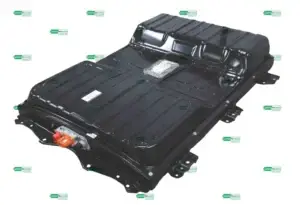
Showing all 6 results
Nissan builds the Leaf at Sunderland, and its own UK newsroom calls it the UK’s most-built electric car. More than 70,000 UK customers have owned one across the first two generations, and the third generation is now entering production at the same plant.
The batteries matter here too. The cells in the original Leaf were engineered by AESC, the Nissan and NEC joint venture, and AESC now runs what Nissan describes as Britain’s newest gigafactory, next door to the Sunderland plant.
So the Leaf is not a car the UK merely imported. It is built here, its batteries are increasingly made here, and there are more of them on British roads than any other electric car. That is why Leaf battery questions come up more often in this country than anywhere else in Europe, and it is why the answers below are written for UK cars rather than translated from American material about a different market.
If you understand nothing else on this page, understand this.
The first and second generation Leaf battery has no active thermal management. The Nissan Leaf battery is passively air cooled. There is no liquid cooling circuit, no battery chiller, no heater holding the pack in its ideal window.
Nearly every rival electric car has one. The Leaf battery did not, and that single engineering decision explains most of what owners experience:
Nissan moved to active liquid cooling for the third generation Leaf. That is a direct acknowledgement of the limitation in the earlier packs, and it is worth knowing if you are comparing an older Leaf battery against a newer one.
None of this makes a Leaf a bad car. It makes the Leaf battery a component whose condition you should actually measure rather than assume.
Four Nissan Leaf battery sizes were sold in the UK across two generations.
| Battery | Generation | Broadly which cars |
|---|---|---|
| 24 kWh | First, ZE0 | The original Leaf, from launch |
| 30 kWh | First, ZE0 | Later first generation cars, introduced on higher trims and later offered more widely |
| 40 kWh | Second, ZE1 | From the 2018 model year |
| 62 kWh e+ | Second, ZE1 | Added from 2019 as the e+ |
| Specification | Detail |
|---|---|
| Chemistry | Lithium-ion, flat laminated cells |
| Cells | 192 |
| Modules | 48, of four cells each |
| Nominal capacity, 24 kWh pack | 24.15 kWh |
| Usable capacity, 24 kWh pack | 21.381 kWh |
| Cell engineering | AESC, the Nissan and NEC joint venture |
| Thermal management | Passive air cooling, no liquid circuit |
The nominal and usable figures are worth sitting with. A 24 kWh Leaf never had 24 kWh to spend. It had roughly 21.4 kWh usable when new, and whatever has degraded since comes off that figure, not off 24. Owners comparing a current range reading against the original brochure number are measuring against a number the car never actually offered.
Send us the registration and we will confirm which Leaf battery your car has. Trim and model year both matter, particularly around the 24 to 30 kWh change.
The Leaf has something most EVs do not: a capacity gauge built into the dashboard, shown as a column of bars beside the charge gauge.
Twelve bars is a healthy pack. Bars disappear as the battery loses capacity, and they do not come back.
This is genuinely useful, but it is a coarse instrument. It tells you roughly where the battery sits, not precisely. The bars do not represent equal slices of capacity, the first bar takes a long time to go and later ones go faster, and a pack can lose real capacity without the display changing.
What the bars are good for: a quick sanity check, and a conversation starter when buying a used Leaf. A car advertised with all twelve bars is in better shape than one showing eight.
What the bars are not good for: deciding whether your Leaf battery needs replacing. For that you want an actual state of health figure read from the battery management system, not an interpretation of a dashboard graphic.
Three levels, in increasing order of usefulness.
Level one: count the bars. Instant and rough, and it costs you nothing but a glance at your own dashboard. Good for a first look at Leaf battery condition and for comparing two used cars on a forecourt.
Level two: read the state of health from the battery management system. The Leaf’s BMS holds a state of health percentage, and it can be read over the car’s diagnostic port with the right tool. This gives you a number rather than a graphic, and it is what any serious assessment starts from.
Level three: have the pack assessed properly. State of health is one figure. What it does not show you is how evenly the pack has aged, whether individual modules have drifted away from the rest, or whether what looks like capacity loss is actually something else in the system.
On a battery built from 48 modules, the distribution matters as much as the headline number. A pack averaging a respectable state of health with several modules well below the rest behaves worse than its percentage suggests, and it will keep getting worse faster.
For a used purchase, do not rely on the bars alone. A state of health reading costs very little relative to what a Leaf battery decision is worth, and it is the single most informative thing you can know about the car.
This is the section worth reading carefully, because the figure quoted almost everywhere online is not the figure Nissan UK publishes for most Leafs on British roads.
| Cover | Term |
|---|---|
| Vehicle warranty, passenger cars | 3 years or 60,000 miles |
| Electrified powertrain components, motor and inverter | 5 years or 60,000 miles |
| Lithium-ion battery, pre-MY22 Leaf | 5 years or 60,000 miles, whichever is sooner |
| Lithium-ion battery, MY22 Leaf onward | 8 years or 100,000 miles, whichever is sooner |
The “eight years and 100,000 miles” figure that dominates search results is what Nissan UK lists for MY22 Leaf onward. For a pre-MY22 Leaf, which is the overwhelming majority of Leafs in this country, Nissan UK’s warranty page lists the lithium-ion battery at 5 years or 60,000 miles, whichever is sooner.
Five years or 60,000 miles is a term that expired long ago on almost every Leaf in Britain. Even a car registered right at the end of the pre-MY22 period has now passed five years.
Nissan’s capacity guarantee, protecting against battery capacity loss below nine bars out of twelve as shown on the in-vehicle gauge, appears on Nissan UK’s current warranty page under light commercial vehicles, at 8 years or 100,000 miles. The passenger car section lists a single combined battery line without a separate state of health entry.
Terms have changed over the Leaf’s life, and the page Nissan publishes today reflects what it offers on current vehicles rather than a complete history. If a capacity guarantee was part of what you bought, the documentation that came with your car is what establishes it. Check your own paperwork and confirm with Nissan rather than relying on any general figure, including this one.
On any reading, a pre-MY22 Leaf is outside its battery warranty. A MY22 or later car may well still be inside 8 years and 100,000 miles. If your Leaf is recent enough to be in doubt, speak to Nissan before you speak to anyone else, and we will tell you the same.

A question specific to the UK, and one that stops a battery conversation dead if the answer is no.
Nissan sold the Leaf here two ways. You could buy the car and buy the battery, owning both outright. Or you could buy the car and lease the battery separately, on what Nissan called Flex models. The lease knocked a substantial amount off the purchase price and was charged monthly, with the rate depending on contract length and annual mileage.
On a Flex car, the battery is not yours. It belongs to Nissan or the finance provider, and you are renting it. While the lease is running, a battery that fails is their problem to resolve, not yours to buy a replacement for.
Most Flex Leafs have changed hands since. The arrangement follows the car, and it is entirely possible to buy a used Leaf privately without realizing there is a battery lease attached to it. The valuation guides of the day would not even publish residual values for electric cars with separately leased batteries, which tells you how much the arrangement complicates ownership.
Before you spend anything on a Leaf battery, establish who owns it. Your V5C will not tell you. Your purchase paperwork might. Nissan can confirm it against the VIN, and that call is worth making before any other decision.
If the battery is leased and still under contract, speak to Nissan or the lease provider first. If it is leased and you want to own it, buy-out has been possible on some agreements. If you own it outright, everything else on this page applies to you.
We would rather send you to Nissan and lose the enquiry than fit a battery to a car where that question was never asked.
The option most Leaf owners do not know exists, and on a first generation car it is often the more interesting conversation.
A Leaf with a tired 24 kWh pack does not have to go back to 24 kWh. Depending on the vehicle and its compatibility, a larger capacity pack can be fitted, which means the car comes back with more usable range than it had when it was new rather than simply restored to where it started.
The argument is straightforward. The work involved in removing an old Leaf battery and fitting a replacement is broadly the same whichever capacity goes back in. Where an upgrade is possible, what changes is the pack, not the job.
For a first generation car this can be transformative. A 24 kWh Leaf that has lost a meaningful share of its original capacity is a short range city car. The same car with substantially more capacity becomes usable for journeys its owner had written off entirely.
Compatibility is not universal. It depends on the vehicle, its model year, its software and what the car can accept. Some Leafs upgrade readily, some do not, and anyone promising an upgrade before they have seen your registration is guessing.
Send us your registration and model year and we will tell you what your particular Leaf can take, including whether an upgrade makes sense or whether a like for like replacement is the better answer.
Range falling away from where it used to be. The clearest sign that a Nissan Leaf battery is losing capacity, and the one owners notice first. The same commute that used to leave comfortable margin now arriving nervous.
Capacity bars disappearing. Covered above. Treat it as a prompt to get a proper reading rather than as the reading itself.
Rapid charging getting slower, especially on longer trips. Successive rapid charges taking longer than the first. On a passively cooled pack some of this is normal thermal protection, but a marked worsening over time is worth investigating.
The guess-o-meter becoming wildly optimistic or pessimistic. The predicted range display adapts to recent driving, which means it can hide gradual degradation and then lurch. It is not a battery health measurement.
Charging to full no longer giving the range it used to. A more reliable Leaf battery signal than the dashboard estimate, because you are comparing a full charge against your own history.
Noticeably worse performance in cold weather than previous winters. Every EV loses range in cold. A pack that has degraded loses more, from a lower starting point.
No single symptom is a diagnosis. Range loss can come from the battery, from a charging fault, from how the car has been driven recently, or from the weather. Get the state of health read before concluding anything.
Because the pack is passively cooled, the things that shorten its life are mostly things that make it hot or keep it full.
Frequent rapid charging. The single biggest factor in Nissan Leaf battery degradation. Rapid charging puts heat into a pack with no active way to remove it. A Leaf that has lived on rapid chargers will generally be in worse condition than one of the same age and mileage charged slowly at home.
Heat. Parking in direct sun through summer, or a car that regularly sits hot after driving and charging.
Sitting at 100 percent. Lithium-ion cells age faster held at full charge. A Leaf left plugged in at 100 percent for long periods is being aged unnecessarily.
Sitting at very low charge for long periods. The opposite problem, and also unhelpful.
Repeated deep cycling. Running consistently from full to nearly empty is harder on the pack than shallower cycles.
Slower AC charging at home where you have the option, charging to around 80 percent for everyday use and saving 100 percent for days you genuinely need the range, avoiding leaving the car at either extreme for long stretches, and parking out of direct heat where you can.
Owners who have done this consistently tend to have visibly better packs than the mileage would suggest, which is the clearest evidence that these habits matter on this particular car.
A Nissan Leaf battery that is finished as a car battery is very far from finished.
These are lithium-ion packs, so the recoverable materials are lithium and cobalt and the other metals in the cells, which is a different recovery stream from the nickel in an older hybrid pack.
The second life case is unusually strong on a Leaf, and it is one of the reasons these packs are in demand. A pack built from 48 modules that no longer satisfies a car can still be entirely capable in a static application where weight does not matter and nothing is asking it for rapid discharge. Leaf modules have been used in home energy storage for years, and it is a genuine second career rather than a token one.
Every pack that comes back to us is assessed at module level. What fails goes to Greentec Recycling for materials recovery. What still holds real capacity can go on to that second life.
Greentec Recycling only started up in 2025, so we are not going to publish volumes we have not handled. What we will tell you is the destination.
Our UK base is Unit 14 Bridgewater Point, Trafford Park, Manchester, M32 0QP.
Leaf owners contact us from across the country, London and Birmingham through to Leeds, Liverpool and the North East. Speak to us before setting off, so we can confirm which battery your car takes and what the sensible next step is.
To discuss a Nissan Leaf battery, call 0808 1966398 or use the contact form.
Useful to have ready:
Greentec’s knowledge and passion for their work are truly impressive. They service both Hybrid and fully Electric Vehicle (EV) batteries. I had an excellent experience and wish Ben and George all the best. I will enthusiastically recommend them to all my friends and colleagues. If you need expert, honest, and high-value service for your hybrid or EV battery, look no further than Greentec.

Paul Frankel (UK)
December 21, 2025
Ben and George are absolutely amazing! I came in after learning my Toyota Hybrid battery needed replacing. They took me through the work that needed doing, took photos of the process and repaired my hybrid battery. Since having the work done, my car drives smoothly and I feel confident driving it again! If you’re looking for a hybrid battery replacement in and around Manchester, this is your place.
Orlajay (UK)
February 20, 2026
I am one of Greentec earliest customers in Manchester. They replaced my Tesla model 3 performance battery. The full range is back to 303 miles. Ben kept in close contact during the process. The car runs perfectly. Highly professional, very skilled and significantly lower cost the Tesla. I highly recommend their services
Dr D D (UK)
March 16, 2026
Meeting Ben and George was a great experience, both incredibly friendly, enthusiastic and clearly knew their stuff – Took me through the whole process and were greatly accommodating as well. Picking the car up was an equally great experience, showed me top to bottom how they’d diagnosed the issue, what they’d found (some components may as well have been charcoal they were that corroded), how they fixed it and included pictures of the whole process. Thanks again guys, great stuff.
Hikara Leet (UK)
March 17, 2026
Their technical knowledge of Tesla vehicles was very reassuring, and it was clear they knew exactly what they were doing. The cost was also very reasonable, especially considering the quality of the work and the level of expertise involved. Everything was handled efficiently and professionally, and the car was back on the road quickly. Overall, I’m extremely happy with the service I received and wouldn’t hesitate to use Greentech Auto again in the future. Highly recommended for anyone needing reliable and knowledgeable EV service.
Matt Brooks (UK)
March 17, 2026
A massive thanks to Ben and George We came to you after our bmw x5 showed problems with the charging system BMW at Sheffield wanted to charge us 5k for the repair to the battery safety box. We also tried two independents at Sheffield neither were interested in diagnosing the problem. Ben and his team came way under the quoted price from bmw and talked me through what was needed, kept me informed of every step of the repair We now have a car that is in fully working order. I would highly recommend anyone with a problem with a EV to try greentec Very happy customer
Bev & Dave Sheffield (UK)
March 20, 2026



If your hybrid vehicle isn’t performing as it should or you’ve noticed a battery warning light, it’s important to have it inspected by hybrid battery specialists. An accurate diagnosis helps determine the condition of your battery and whether a replacement is the right solution.
At Greentec Auto UK, we specialise in high-quality hybrid battery replacements for a wide range of vehicles. Every battery is thoroughly tested to ensure dependable performance and is backed by a comprehensive warranty for added peace of mind.
Our experienced team proudly serves customers across London, Manchester, Birmingham, Leeds, and Liverpool, providing expert guidance and professional hybrid battery solutions. Whether you’re researching replacement options or ready to restore your vehicle’s performance, we’re here to help every step of the way.
Most Nissan Leaf batteries last around 8 to 10 years, though earlier 24 kWh packs may show degradation sooner. Charging habits, mileage, and climate all impact lifespan.
The cost of replacing a Nissan Leaf battery depends on the model year and pack size. While dealer prices can hit £6,000 or more, Greentec Auto UK offers affordable, tested options starting at a fraction of that.
If your Leaf is out of warranty, our replacement packs come with their own UK-wide warranty, covering parts and performance for your peace of mind.
Yes! We offer battery upgrades in many cases—such as moving from 24 kWh to 30 kWh or 40 kWh—depending on your vehicle’s compatibility.
Most Nissan Leaf battery replacements take one working day. Our mobile service team installs, tests, and recycles—all from your driveway.