Imagine you’re halfway through your morning commute when your engine suddenly revs loudly, yet your car feels sluggish and heavy. It’s a stressful moment that often leads to one nagging question: is it finally time? Many drivers feel a sense of dread when they first notice the subtle signs of a failing hybrid battery, fearing that a single dashboard warning light will result in a bill from the dealer that costs more than the vehicle’s current value.
We understand that your hybrid is more than just a piece of technology; it’s your reliable partner for daily life. You shouldn’t have to face the anxiety of being stranded or the confusion of cryptic error codes alone. This article will help you identify exactly where your battery health stands and provide a clear path toward a professional, affordable resolution. We will walk through seven critical warning signals, including rapid fluctuations in your state-of-charge and unexpected drops in fuel efficiency, so you can make an informed decision and get back to driving with total peace of mind.
Key Takeaways
- Spot the early signs of a failing hybrid battery, including declining fuel economy and an engine that runs more often than it should.
- Learn how to interpret dashboard error codes and the “Triangle of Death” to distinguish between minor glitches and critical battery degradation.
- Understand the hidden risks of delaying a replacement, such as putting unnecessary strain on your gas engine or risking a costly inverter failure.
- Explore professional replacement options like mobile installation that bring expert service and reliable battery solutions directly to your driveway.
- Find out why specialized mobile service is a safer, more convenient alternative to the traditional dealership experience for high-voltage systems.
Understanding the Life Cycle of Your Hybrid Battery
Your hybrid battery is far more than a simple storage unit; it is the heartbeat of your vehicle’s electrified powertrain. It works tirelessly to manage power flow between the electric motor and the internal combustion engine, absorbing energy during braking and providing a boost during acceleration. This constant activity means the battery is always under stress. Even with the advancements we see in 2026, the fundamental chemical reactions inside every cell have a finite lifespan. Over time, heat and repeated charge cycles lead to internal resistance, which is why your car might not feel as punchy as it once did.
While newer vehicles like the Toyota BZ4X or Tesla models utilize advanced Lithium-ion chemistries, many reliable workhorses like the Toyota Prius and Camry Hybrid still rely on Nickel-Metal Hydride (NiMH) packs. Understanding the Life Cycle of Your Hybrid Battery helps clarify why these different chemistries fail in unique ways. NiMH batteries are rugged but can suffer from capacity loss over a decade of use. Lithium-ion batteries offer incredible energy density but are particularly sensitive to high-temperature environments. Regardless of the type, chemical degradation is an inevitable reality that eventually leads to the common signs of a failing hybrid battery.
How Long Should a Hybrid Battery Last?
Most manufacturers design their hybrid systems to last between 8 and 15 years, or roughly 100,000 to 150,000 miles. However, these milestones aren’t set in stone. If you live in a region with extreme summer heat or if your car sits idle for weeks at a time, the chemical components can age prematurely. Driving habits also play a role; frequent, short trips that don’t allow the battery to reach its optimal operating temperature can accelerate the wear process. We often see batteries in high-mileage Toyota Highlander or RAV4 Hybrid models reach their limit right around the ten-year mark.
Soft Failure vs. Hard Failure
We categorize battery decline into two stages. A “soft failure” involves performance drops that are noticeable but don’t stop the car from moving. You might see your fuel economy dip or notice the gasoline engine kicking in more frequently. These are early signs of a failing hybrid battery that you shouldn’t ignore. A “hard failure” is more dramatic. This occurs when the vehicle’s computer detects a cell imbalance so severe that it shuts down the hybrid system entirely to prevent a fire or electrical surge. Catching a soft failure early is vital because it prevents the weak battery from overworking and damaging the inverter, a component that is often far more expensive to repair than the battery itself.
The 7 Most Common Signs of a Failing Hybrid Battery
Identifying the signs of a failing hybrid battery early can save you from a stressful breakdown on a busy highway. While your car might still seem operational, these subtle red flags indicate that the high-voltage system is struggling to balance its internal chemistry. Recognizing these symptoms allows you to plan for a solution before a “soft failure” turns into a total system shutdown. If you notice your car behaving differently than it did a year ago, it is likely trying to tell you something important about its health.
- A steady and noticeable decline in your average Miles Per Gallon (MPG).
- The internal combustion engine (ICE) running at stoplights or during low-speed coasting.
- Rapid, erratic jumping of the battery icon on your dashboard gauge.
- Loud, persistent whirring noises from the battery’s dedicated cooling fan.
- A significant loss of “pep” or acceleration when merging into traffic.
- The vehicle’s refusal to stay in electric-only (EV) mode, even with a light foot.
- Reduced effectiveness of regenerative braking, making the car feel “heavier” when slowing down.
The ‘State of Charge’ Rollercoaster
Have you noticed your battery gauge swinging from nearly full to two bars in just a few minutes of city driving? This “rollercoaster” effect is a classic symptom of high internal resistance. When battery cells degrade, they can no longer hold a deep charge, leading the car’s computer to see deceptive voltage spikes. It might even attempt a “forced recalibration,” where the engine revs at a high RPM while you’re stopped to try and pump energy back into the pack. According to the NHTSA, maintaining these complex electrical systems is vital for both vehicle longevity and overall road safety.
The Cooling Fan: A Warning You Can Hear
If you hear a loud fan running in the backseat or trunk area, your battery is likely struggling with heat. This cooling fan triggers when the battery cells reach high temperatures, which happens more frequently as they age and fail. While dust can sometimes block the intake vents, a fan that stays on high even during a mild day is often a sign of internal distress. We often refer to this as the “Fan of Doom” because it signals that the battery is working too hard to stay within a safe operating range.
Decreased Fuel Economy and Engine Over-Reliance
Your hybrid was designed to use its electric motor to offset gas consumption, but a weak battery forces the gasoline engine to do all the heavy lifting. You’ll notice the engine kicks in the moment you touch the accelerator, rather than allowing for silent, electric gliding. A healthy battery acts as a robust energy reservoir; a failing battery becomes a parasitic load that requires constant charging from the engine. If your fuel costs are creeping up, exploring a Toyota Prius Replacement Battery or a similar specialist solution can restore your vehicle’s original efficiency and save you money at the pump.
Decoding Dashboard Warnings and Error Codes
When your car’s computer detects that something is wrong, it communicates through a series of visual alerts. While the physical symptoms we discussed previously are vital clues, the digital data stored in your vehicle’s management system provides the most accurate picture of health. Understanding these signs of a failing hybrid battery from a technical perspective helps you move past the initial anxiety of a warning light toward a clear, actionable solution.
The Master Warning Light (Triangle of Death)
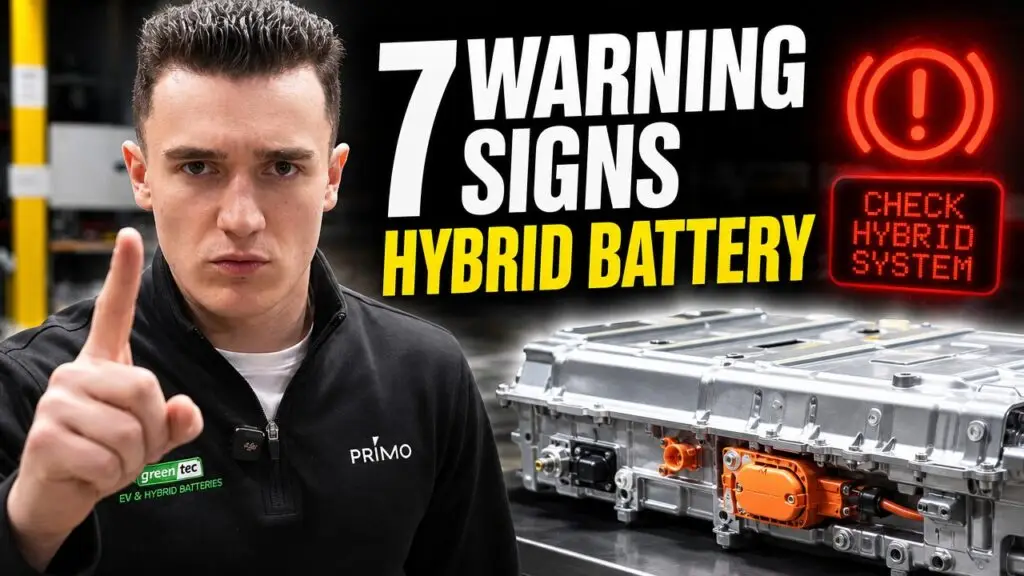
The most famous alert in the hybrid world is the red triangle with an exclamation point, often called the “Triangle of Death.” If this appears while you are driving, do not panic. It simply indicates that the Master Warning system has detected a fault that requires immediate attention. Your first step should be to find a safe place to pull over and restart the vehicle. Sometimes, a simple glitch can trigger the light, but if it persists alongside a “Check Hybrid System” message, the computer has confirmed a legitimate issue.
It is important to remember that this light does not always mean your high-voltage battery is completely dead. In many cases, a failing 12V auxiliary battery can cause the hybrid control computer to throw false error codes. This smaller battery powers the car’s computers and relays; if its voltage drops too low, it can’t properly “wake up” the hybrid system. We always recommend testing the 12V battery first, as it is a much simpler and less expensive fix than replacing the entire traction pack.
Professional Diagnostics vs. DIY Scanners
Many owners try to diagnose issues using inexpensive Bluetooth OBD-II dongles and smartphone apps. While these tools are great for basic checks, they often miss the deep-level module data required for a true hybrid health assessment. A professional-grade diagnostic tool allows a technician to see the “voltage delta,” which is the difference in voltage between the strongest and weakest modules in your battery pack. A healthy battery maintains a very tight delta; once that gap widens beyond 0.3 volts, the system will likely trigger a failure code.
Specific codes provide a roadmap for the repair. You should watch for these common indicators:
- P0A80: This is the primary code for “Replace Hybrid Battery Pack,” triggered when the computer sees a module with significantly lower capacity.
- P3000: This indicates an abnormal signal from the hybrid control system, often appearing alongside other battery-specific faults.
- P3011 through P3024: These codes point directly to a specific module or “block” within the pack that has failed.
Some drivers attempt to “clear the code” to make the warning light disappear. We strongly advise against this. Clearing a code does not fix the underlying chemical imbalance in the cells. It only masks the problem, often leading to a situation where you are left stranded when the battery eventually suffers a hard failure during a trip.
The Risks of Delaying Hybrid Battery Replacement
It’s tempting to keep driving when you first notice the signs of a failing hybrid battery. You might think you can squeeze out a few more months of use, but this delay often creates a ripple effect throughout your vehicle. The hybrid system is a delicate balance of electrical and mechanical forces. Once that balance shifts, the “soft failure” symptoms we discussed earlier can rapidly evolve into expensive collateral damage that extends far beyond the battery pack itself.
Collateral Damage to the Hybrid Powertrain
The most significant risk of waiting involves your inverter and converter assembly. This component is the brain of the high-voltage system, managing the flow of electricity between the battery and the electric motors. When a battery pack has high internal resistance, the inverter must work significantly harder to force a charge into the failing cells. This process generates excessive heat, which can eventually fry the inverter’s sensitive internal circuitry. Replacing an inverter is often a much costlier repair than a battery swap, turning a manageable maintenance task into a major financial burden.
A struggling high-voltage system also puts a heavy load on your 12V auxiliary battery. Because the high-voltage pack is responsible for keeping the 12V battery charged through the DC-DC converter, a failure in the main pack can lead to a dead 12V battery as well. You might find yourself unable to even “boot up” the car’s computers, leaving you stuck in your driveway. By addressing the signs of a failing hybrid battery early, you protect these surrounding components and maintain the long-term reliability of your vehicle’s entire powertrain.
Safety and Reliability on the Road
Safety is the most compelling reason to act quickly. When the vehicle’s computer determines that the battery is no longer stable, it may trigger “Limp Mode.” In this state, your car drastically reduces its power output to prevent further damage. This sudden loss of acceleration can be incredibly dangerous if you’re trying to merge onto a highway or navigate a busy intersection. The unpredictability of a dying battery is also heightened by extreme weather. The first summer heatwave or winter freeze often provides the final stressor that turns a weak battery into a complete “hard failure.”
Waiting for a total breakdown also strips away your ability to choose a cost-effective solution. If your car stalls in traffic, you’ll likely be forced to pay for an expensive tow to the nearest dealership, where you’ll face high retail prices. Taking a proactive approach allows you to explore more affordable, specialized options on your own schedule. If you want to avoid the stress of a roadside emergency, consider a Hybrid Battery Replacement from a specialist who can restore your car’s performance before you’re left stranded.
Finally, consider your vehicle’s resale value. A hybrid with a documented battery replacement from a reputable specialist is a much more attractive prospect for future buyers. It shows that the car has been well-maintained and is ready for another decade of service. Proactive care ensures that your car remains a reliable asset rather than a ticking financial clock.
Professional Solutions: Replacement and Mobile Installation
Once you’ve identified the signs of a failing hybrid battery, the next step is choosing a path that restores your vehicle’s reliability without the steep markup of a traditional dealership. We believe that professional service should be as convenient as it is effective. While some sources suggest that battery replacement is a project you can tackle in your garage, we strongly advise against it. High-voltage systems in modern hybrids carry several hundred volts; even a small mistake can lead to severe injury or permanent damage to your car’s electrical architecture. It’s a task that requires specialized tools and deep technical expertise.
Choosing the right battery depends on your budget and how long you plan to keep the vehicle. You generally have three main paths to consider:
- New OEM Batteries: These provide the original factory performance and are ideal for newer models like a Toyota RAV4 Hybrid or Toyota Highlander Hybrid.
- Remanufactured Batteries: A cost-effective solution where individual cells are tested and balanced by experts to ensure a reliable second life for your vehicle.
- Upgraded Packs: Some specialized options offer improved cell chemistry that can actually outperform the original factory specifications in specific environments.
Mobile Installation: We Bring the Shop to You
The most stressful part of a car repair is often the logistics. You shouldn’t have to worry about your car breaking down on the way to a service center or paying for an expensive tow. Our Mobile Battery Installation Service solves this problem by bringing a certified technician directly to your home or office. We handle the entire process on-site, including the safe removal of the old pack and the professional calibration of the new system. This approach eliminates long dealer wait times and ensures your car is road-tested and ready to go before we leave your driveway.
Our nationwide reach means that expert help is never far away. Whether you’re dealing with a sudden failure or a planned upgrade, we provide the same level of care and precision you’d expect from a high-end shop, but with the personal touch of a local specialist. We perform a full system health check during every visit to ensure that all components are communicating correctly after the swap.
Specialized Options for Toyota, Honda, and Tesla
Every vehicle is unique, and we treat them that way. We maintain a specialized inventory for high-demand models, ensuring we have a Toyota Prius Replacement Battery or a Toyota Camry Hybrid Replacement Battery ready when you need it. Our expertise also extends to more complex systems, including Tesla Battery Replacement and solutions for the Honda Accord Hybrid. With over 14 years of specialized experience, we provide a level of technical authority that general repair shops simply cannot match.
Investing in a professional replacement is about more than just clearing a dashboard light; it’s about reclaiming the efficiency and peace of mind you expect from your vehicle. Every installation comes with the support of a national network, ensuring you’re covered no matter where the road takes you. Don’t wait for a complete system shutdown to take action. Schedule your mobile hybrid battery installation today and let our specialists handle the heavy lifting while you get back to your life.
Restore Your Hybrid’s Performance and Peace of Mind
Your vehicle is a significant investment, and staying ahead of battery degradation is the best way to protect it. By learning to identify the signs of a failing hybrid battery, such as erratic charge levels or a loud cooling fan, you can take action before a minor performance dip turns into a major repair. We’ve seen how addressing these issues early prevents collateral damage to your inverter and keeps your fuel economy where it belongs.
You don’t have to navigate this process alone. With over 14 years of specialized experience, our expert technicians provide reliable solutions tailored for Toyota, Honda, and Tesla models. Our nationwide mobile installation service brings the shop directly to your driveway, removing the stress of towing and dealer wait times. We handle the technical complexity so you can focus on getting back to your daily routine with confidence. If you’re ready to secure your car’s future, Get a Quote for Your Hybrid Battery Replacement today. We’re here to help you drive silent and efficient once again.
Frequently Asked Questions
Can I still drive my hybrid car if the battery is failing?
You can drive for a short time, but it’s risky and not recommended. Your car might enter “Limp Mode,” which significantly reduces power to protect the internal components from further damage. Continuing to drive with clear signs of a failing hybrid battery puts extra strain on the gasoline engine and the inverter. It’s best to address the issue quickly before you’re left stranded in a dangerous traffic situation.
How much does a hybrid battery replacement cost in 2026?
In 2026, the average cost for a high-voltage battery replacement typically ranges between $5,053 and $5,253 when performed at a dealership. However, specialized third-party providers offer more affordable options that often range from $1,000 to $6,000 depending on the specific vehicle model and battery chemistry. Choosing a specialist for your replacement can lead to substantial savings while still providing professional results and robust warranty protection for your investment.
Will a bad hybrid battery prevent my car from starting?
Yes, a dead hybrid battery will eventually prevent your car from starting. In most hybrid systems, the high-voltage battery is responsible for cranking the internal combustion engine rather than a traditional starter motor. If the pack’s charge is too low or the system detects a critical fault, the computer will prevent the engine from firing to protect the electrical components. This is why addressing early warning signals is so important for reliability.
What is the difference between a 12V battery and the hybrid battery pack?
The 12V auxiliary battery powers your car’s computers, lights, and accessories, while the hybrid battery pack provides the energy needed to move the vehicle. Think of the 12V battery as the “key” that wakes up the system. If it’s weak, your car won’t start even if the hybrid pack is healthy. Conversely, a failing hybrid pack means you lose electric propulsion, acceleration “pep,” and your signature fuel efficiency.
How long does the actual battery replacement process take?
A professional battery replacement typically takes between one and three hours to complete. Our mobile technicians arrive with all the necessary tools to perform the swap right in your driveway or at your workplace. This efficient process includes the physical installation, high-voltage safety checks, and final system calibration. You’ll be back on the road much faster than if you had to coordinate towing and wait for a dealership service appointment.
Can a hybrid battery be repaired or reconditioned instead of replaced?
While individual modules can be replaced or reconditioned, this is often a temporary solution. When one cell fails, the others in the pack are usually close behind because they’ve been exposed to the same age and heat levels. A full replacement provides a much higher level of long-term reliability and peace of mind. We focus on providing complete battery solutions that ensure your car remains dependable for many years to come.
Does cold weather affect a failing hybrid battery more than heat?
Heat is the primary “silent killer” that degrades battery chemistry over time, but cold weather often reveals the damage. Low temperatures increase internal resistance, making it much harder for a weak battery to provide the necessary power to start the engine or maintain a charge. If you notice your car struggling during a winter freeze, it’s frequently because previous summer heatwaves already compromised the health of the internal cells.
Is it worth replacing the battery on a hybrid with over 150,000 miles?
Replacing the battery is often worth it because hybrid vehicles are known for their exceptional mechanical longevity. Many Toyota Prius and Camry models easily surpass 300,000 miles with proper maintenance. If your engine and transmission are in good shape, a new battery can essentially give your car a second life. It’s a cost-effective way to keep a reliable, fuel-efficient vehicle on the road for several more years without new car payments.