
Regenerative braking is one of the most useful features in a hybrid or electric vehicle. Instead of wasting all the energy created when the car slows down, the system captures some of that energy and sends it back to the high-voltage battery.
That sounds useful, but it also raises a common question:
Does regenerative braking wear out the battery by constantly charging it?
The short answer is no, not in the way many drivers think.
Regenerative braking does add small charge and discharge cycles to the battery. That is part of normal battery use. However, hybrid and EV battery systems are designed to handle this process. The car also controls how much regenerative energy the battery can accept.
Regenerative braking itself is not usually a sign that your battery is being damaged or worn out too quickly.
Here is what actually happens.
What Is Regenerative Braking?
In a normal petrol or diesel car, the friction brakes slow the vehicle by turning its movement into heat.
Hybrid and electric vehicles can do something smarter.
When you slow down, the electric motor can work as a generator. It converts some of the car’s movement into electrical energy and sends that energy back to the high-voltage battery.
The U.S. Department of Energy describes regenerative braking as a system that captures energy that would otherwise be lost during braking and stores it in the battery.
This can:
- Recover some energy while driving
- Improve vehicle efficiency
- Reduce how often friction brakes need to do all the work
- Help reduce brake wear
For self-charging hybrids, regenerative braking is also one of the main ways the hybrid battery receives energy while the car is being driven.
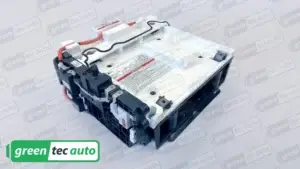
If you want to learn more about the batteries used in these vehicles, visit our EV and hybrid battery replacement page.
Myth 1: Every Time You Regenerate, You Use Up a Full Battery Cycle
Reality: regenerative braking does not normally equal a full battery cycle.
This is one of the biggest misunderstandings about hybrid and EV batteries.
A full battery cycle generally refers to an amount of charging and discharging equal to the battery’s full usable capacity. It does not necessarily happen each time the battery gains a little energy.
Regenerative braking often adds relatively small amounts of energy during normal driving.
For example, slowing down at a junction may return some energy to the battery. Accelerating again may use some of it. These smaller movements in battery charge are part of the operating pattern the vehicle was designed to manage.
Battery ageing does include cycle-related wear, but researchers at the National Renewable Energy Laboratory also consider many other factors, including temperature, operating range, charging and discharging rates, storage conditions, and cycling patterns.
So it is too simple to say:
“More regenerative braking means the battery will wear out faster.”
Battery ageing is much more complicated than that.
Myth 2: Regenerative Braking Can Easily Overcharge the Battery
Reality: the vehicle controls how much energy the battery accepts.
Modern hybrid and EV batteries are managed by electronic control systems.
The vehicle monitors factors such as:
- Battery state of charge
- Battery temperature
- Available charging power
- Vehicle speed
- Braking demand
If the battery cannot safely accept as much regenerative energy, the vehicle can reduce regenerative braking.
This is easy to see in some EVs.
Tesla states in its owner’s manuals that regenerative braking may be limited when the battery is cold or already fully charged.
Hyundai also states that regenerative braking may be limited depending on battery charge and temperature. Some Hyundai vehicles display a message explaining that regeneration is temporarily limited to protect the battery when it is fully charged.
In other words, the vehicle does not simply force unlimited braking energy into the battery.
The system has limits.
Myth 3: Strong Regenerative Braking Must Be Bad for the Battery
Reality: stronger regenerative braking does not automatically mean battery damage.
Some EVs allow the driver to select different levels of regenerative braking. Others adjust regeneration automatically.
A stronger setting may cause the car to slow down more quickly when you lift off the accelerator. That can also mean more energy is being recovered at that moment.
But the battery management system still decides how much power the battery can safely accept.
If conditions are not suitable for strong regeneration, the vehicle can reduce it or use the normal braking system as needed.
You should therefore use the regenerative braking settings recommended for your vehicle rather than worrying that normal use will quickly damage the battery.
Always check your owner’s manual because regenerative braking systems vary between manufacturers and models.
What Actually Causes Hybrid and EV Batteries to Age?
All automotive batteries age eventually.
Battery ageing happens both while the battery is being used and simply as time passes.
NREL research describes two important forms of battery ageing:
Cycle ageing happens as energy moves in and out of a battery during use.
Calendar ageing happens over time, even when the battery is not being heavily cycled.
Battery life can also be influenced by factors including:
Temperature
Battery temperature matters.
Very high or very low temperatures can affect battery performance and ageing. This is one reason modern EVs use battery monitoring and, in many cases, thermal management systems.
State of Charge
How much energy is stored in a battery can also affect ageing.
The vehicle’s control system manages the battery’s operating range rather than allowing uncontrolled charging and discharging.
Charging and Discharging Rate
How quickly energy enters or leaves a battery can affect the stress placed on its cells.
Again, the vehicle manages these limits during normal operation.
Time
A battery continues to age even when the vehicle covers relatively few miles.
This is why an older low-mileage hybrid does not automatically have a healthier battery than a newer vehicle with more miles.
We explain this in more detail in our guide to whether age or high mileage affects a hybrid battery first.
Regenerative Braking Can Actually Reduce Wear Elsewhere
There is another side to regenerative braking that is often missed.
It can reduce wear on the vehicle’s friction brakes.
The U.S. Department of Energy notes that brake wear is significantly reduced in electric vehicles because regenerative braking can perform part of the work normally handled by the conventional braking system.
When the electric motor slows the vehicle, the friction brakes may not need to work as hard during every slowdown.
That does not mean conventional brakes are no longer important. They remain an essential part of the braking system.
It simply means regenerative braking can reduce how much they are used during normal driving.
Why Does Regenerative Braking Sometimes Feel Weaker?
You may notice that regenerative braking feels stronger on one journey and weaker on another.
That does not automatically mean something is wrong.
Regenerative braking can be reduced when:
- The high-voltage battery is close to full
- The battery is very cold
- The battery is too hot
- The vehicle needs more braking force than regeneration alone can provide
- Driving or road conditions require the normal brakes to take a larger role
Manufacturers design vehicles to switch or blend between regenerative and friction braking when needed.
If regenerative braking suddenly behaves differently and the vehicle also displays warning lights or battery fault messages, however, it is worth having the system checked.
GreenTec Auto UK provides EV and hybrid battery replacement services for a wide range of vehicles.
You can also browse replacement options by manufacturer, including Toyota hybrid and EV batteries.
Does One-Pedal Driving Wear Out the Battery Faster?
One-pedal driving makes greater use of regenerative braking when you lift your foot from the accelerator.
That does not mean every use creates a damaging battery cycle.
The vehicle is still controlling the amount of regenerative energy that reaches the battery. If the battery cannot accept the requested level of regeneration, the system can limit regenerative braking.
For drivers, the best approach is simple.
Use the vehicle as the manufacturer intended. You do not need to avoid regenerative braking because you are worried about protecting the battery.
Should You Turn Regenerative Braking Down to Save the Battery?
For most drivers, there is no reason to turn regenerative braking down simply because you are worried about battery wear.
Regeneration is built into the vehicle’s normal energy-management strategy.
Some drivers may prefer a lower regeneration setting because they like the way the car coasts. Others prefer stronger regeneration or one-pedal driving.
The available choices depend on the vehicle.
The important point is that normal use of the manufacturer’s regenerative braking system is not the same as uncontrolled charging.
The car is managing the process for you.
Signs of a Battery Problem Are Different
If a hybrid or EV battery is ageing or developing a fault, regenerative braking alone is unlikely to tell the whole story.
Depending on the vehicle, possible signs can include:
- Battery or hybrid-system warning lights
- Noticeable loss of EV driving range
- Reduced electric assistance
- Large or unusual changes in the battery charge display
- Changes in overall vehicle performance
- Diagnostic trouble codes related to the high-voltage battery
A proper diagnostic test can help separate a battery problem from faults elsewhere in the hybrid or EV system.
If you suspect a problem, explore GreenTec Auto UK’s EV and hybrid battery replacement services or find your vehicle’s battery options through the website.
What Happens If the High-Voltage Battery Eventually Wears Out?
No hybrid or EV battery lasts forever.
If the battery eventually loses too much usable capacity or develops a fault, replacing the battery may allow the vehicle to continue operating without replacing the entire car.
GreenTec Auto UK supplies battery solutions for many popular hybrid and EV models, including remanufactured battery options where available.
Learn more about hybrid battery replacement options for UK drivers.
Drivers outside the UK can visit the appropriate Greentec Auto website:
- Canada: greentecauto.ca
- United States: greentecauto.com
The Bottom Line: Does Regenerative Braking Wear Out Your Battery?
Regenerative braking does involve charging the high-voltage battery, so it forms part of normal battery cycling.
But that does not mean regenerative braking is rapidly wearing out your battery.
Hybrid and EV systems are designed around regenerative braking. The vehicle controls how much energy the battery receives and can reduce regeneration when battery charge, temperature, or other conditions make it necessary.
Battery ageing is influenced by a combination of time, temperature, cycling patterns, charge level, operating conditions, and other factors.
So there is no need to avoid regenerative braking just to protect your battery.
Use your vehicle normally, follow the manufacturer’s guidance, and pay attention to genuine battery warning signs rather than worrying about every bit of energy recovered when you slow down.
If your vehicle is showing battery warnings or losing performance, visit GreenTec Auto UK to explore your EV or hybrid battery options.
Frequently Asked Questions
1. Does regenerative braking damage an EV or hybrid battery?
No, normal regenerative braking is not considered damaging to an EV or hybrid battery. It sends recovered energy back to the high-voltage battery, but the vehicle controls how much energy the battery can accept. Regenerative braking is part of the vehicle’s normal design.
2. Does regenerative braking count as a battery charge cycle?
Regenerative braking contributes to battery cycling, but each braking event is not normally a full battery cycle. Regeneration often adds only part of the battery’s usable capacity. Battery ageing depends on total use and many other conditions, not simply the number of times the car regenerates energy.
3. Can regenerative braking overcharge an EV battery?
The vehicle is designed to prevent regenerative braking from overcharging the battery. When the battery is full or cannot safely accept more power, the vehicle can limit regeneration and rely more on its conventional braking system.
4. Why is regenerative braking weaker when the battery is full or cold?
Regenerative braking can be reduced when the battery cannot accept as much charging power. A battery that is full, very cold, or outside its preferred temperature range may temporarily accept less regenerative energy. This is a normal protection feature on many vehicles.
5. Should I use less regenerative braking to make my battery last longer?
Most drivers do not need to reduce regenerative braking just to protect the battery. The vehicle’s control systems manage regenerative charging within its operating limits. Following the settings and driving guidance provided by your vehicle manufacturer is the better approach.