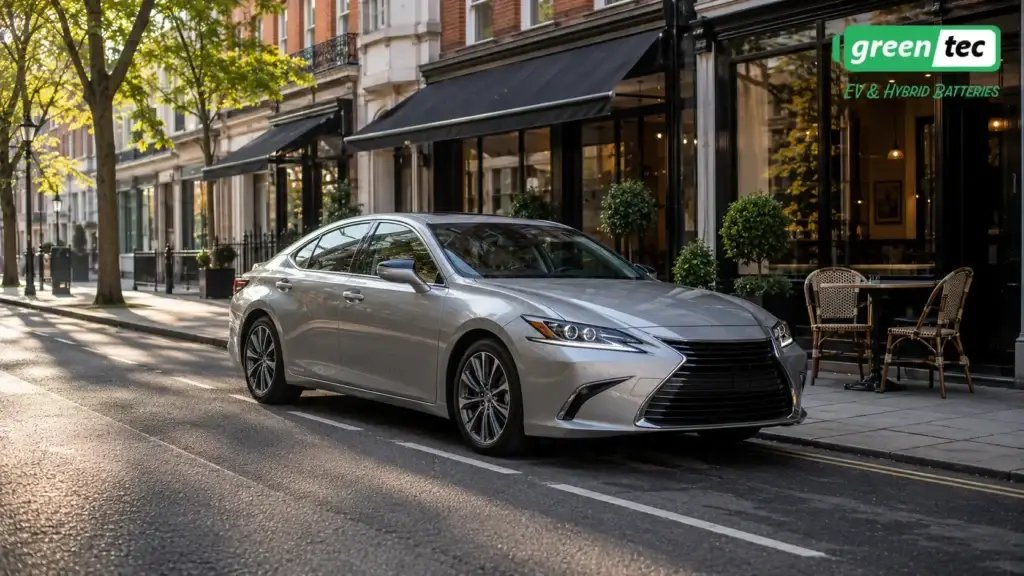
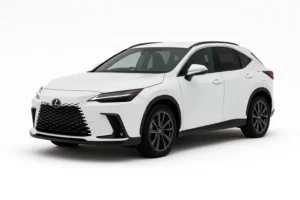
You bought the ES 300h because it is quiet, smooth and easy to live with. It gets on with the job without asking much from you.
Then something changes.
The charge display starts moving up and down faster than it used to. The petrol engine kicks in earlier on the same route to work. Your fuel economy slips a little each month. The car still drives, but it does not feel the way it did.
Most owners reach the same conclusion straight away. The hybrid battery must be finished.
It might be. But it might not be. Those signs tell us something is wrong. They do not tell us which part is at fault.
At Greentec Auto UK, we test before we recommend anything. This guide explains what changes in an ES 300h, what those changes usually mean, and what your options are if the pack really is the problem.
Why the ES 300h Is Different From Other Lexus Hybrids
The ES 300h is a saloon built for long, calm journeys. That gives it a working life that looks nothing like an SUV used for the school run.
Many ES 300h cars in the UK cover big motorway miles. Plenty are used as executive cars or by private hire drivers. That means long spells at steady speed, and often long spells sitting still with the engine idling and the climate control running.
This matters. A hybrid battery that spends hours holding a light, steady load ages differently from one that is constantly charging hard and discharging hard in town traffic.
It also means high mileage arrives quickly. An ES 300h can reach a big number on the odometer while still being fairly young in years.
If you own the SUV instead, we have written a separate guide to the Lexus RX 450h hybrid battery.
How the Hybrid System Works in Your ES 300h
Your car uses a petrol engine and an electric motor together. The electric motor draws power from a high voltage battery pack.
An inverter sits between the pack and the motor. It manages the flow of electrical power in both directions.
A control system watches all of this. It checks how the pack is performing, how warm it is getting, and how the whole system is behaving. When something falls outside the expected range, it stores a fault and may show a warning on the dashboard.
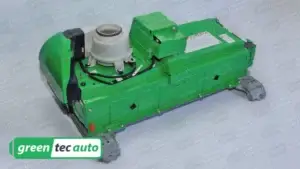
The pack itself is not one single unit. It is made up of many smaller sections joined together. This is important, and we come back to it later.
Where the Battery Sits, and Why It Varies
The high voltage pack in the ES 300h sits at the rear of the car.
The exact position is not the same across every version. In some, the pack sits under the rear seat. In others, it sits behind the rear seat back. Lexus changed the layout during the model’s life, and the battery chemistry changed too. Some versions use a nickel metal hydride pack. Later ones use a lithium ion pack, which is more compact.
This is why we always confirm the exact vehicle before we discuss any replacement. Two ES 300h saloons that look almost identical on the driveway can need different parts and a different job.
There is one thing every version shares. The pack needs airflow to stay cool, and that air comes from inside the cabin.
What UK Owners Usually Notice First
These are the changes drivers report to us most often, roughly in the order they tend to appear.
- The charge display rises and falls faster than it used to
- The petrol engine runs earlier and more often
- Fuel economy drops slowly over weeks or months
- The car feels slower when pulling away or joining faster traffic
- The cooling fan near the rear seats becomes louder
- The car does not settle into quiet electric running as easily
- A warning message appears on the dashboard
One point worth making clearly. Several of these can have causes that have nothing to do with the hybrid pack. Cold weather, tyre pressures, a change in your route, or a fault somewhere else in the car can all produce similar symptoms.
For a fuller breakdown, read our guide to the signs of a failing hybrid battery.
What Actually Weakens an ES 300h Battery
Uneven ageing across the pack
The pack is made of many sections. They do not all age at the same rate.
In most cases, a hybrid battery does not simply stop. A few sections become weaker than the rest. The control system sees the difference between them and flags a problem. The rest of the pack may still be in reasonable condition.
This is why proper testing matters. Knowing which sections are weak, and by how much, tells us far more than a single pass or fail result.
Heat and blocked airflow
The pack draws cooling air from the cabin through an intake in the rear.
In a saloon, that intake is easy to cover without realising. A bag on the rear seat, a folded coat, a boot loaded to the roof, or a build up of dust and pet hair in the vent can all reduce airflow.
Less air means more heat. Heat is what shortens battery life.
We cover this in detail in our guide to dust, pet hair and blocked vents.
Long periods of idling
An ES 300h used for chauffeur or private hire work spends real time stationary with the system awake.
The car handles this by design. But long hours of low level activity, repeated day after day for years, add up in a way that a private owner’s commute does not.
Long spells parked and unused
Some ES 300h cars are second vehicles that sit for weeks between trips. That is not ideal for a hybrid system either.
Our guide to habits that quietly damage your hybrid battery covers the everyday choices that make the biggest difference.
Is It the Battery, or Something Else?
This is the most valuable section of this guide, so please read it before you agree to any work.
A hybrid warning tells you the car has found a fault. It does not name the part. On an ES 300h, the same symptoms can come from:
- A cooling fan or airflow problem rather than the pack itself
- An inverter or power control fault
- A sensor, connector or wiring fault
- A fault in a completely different system that appears alongside the hybrid warning
Replacing a battery that was never the problem is the most expensive mistake an ES 300h owner can make. The car goes back on the road, the warning returns, and nothing has actually been fixed.
If you have seen a message on your dashboard, our guide to the Check Hybrid System warning explains what it does and does not mean.
Can You Keep Driving?
That depends on what your car is telling you.
Follow the message on the dashboard and the advice in your owner’s manual. Stop safely as soon as you can if the car instructs you to stop, if a red warning appears, if you lose power, or if you notice smoke, a burning smell, unusual heat or a change in how the car handles.
Do not assume the car is fine simply because it still moves.
It also helps to avoid switching the car off and on repeatedly to clear a message. The warning may disappear for a while, but the fault has not been repaired. Worse, resetting can wipe stored information that would have helped us find the cause.
Our guide on what happens when a hybrid battery fails explains how these faults usually progress.
What We Check When an ES 300h Comes In
Our aim is to answer two questions. Which system reported the fault, and is the hybrid battery genuinely responsible?
Depending on the car and what it has stored, testing may include:
- Reading the fault information held by the hybrid system
- Reviewing how the pack performs under load
- Comparing the different sections of the pack against each other
- Checking temperature readings across the pack
- Inspecting the cooling fan and the cabin air intake
- Checking related wiring and connections
- Confirming whether another system triggered the warning
Only after that do we talk to you about what should happen next. We do not recommend a replacement based on a guess.
You can read more about our hybrid battery services or take a look inside our Manchester workshop.
If the Battery Is Confirmed as the Fault
At this point you have a real answer rather than a guess, and you can make a proper decision.
We supply remanufactured packs for supported Lexus models. Remanufacturing means the pack is stripped down and every component is tested. Weak parts are removed. Parts that pass testing are reused, and the housing and casing are reused too.
That approach does two things. It keeps a good car on the road, and it keeps material out of the waste stream instead of building everything from scratch.
The right option for you depends on your exact vehicle, what the testing showed, and how long you plan to keep the car.
You can see the options we hold for your model on our Lexus ES 300h battery page, or browse the full EV and hybrid battery range.
What About Your Lexus Warranty?
Worth checking before you go anywhere.
Lexus UK covers the hybrid battery and hybrid components for up to 10 years or 100,000 miles, whichever comes first, provided the car has kept up with qualifying services at a Lexus centre. After that, cover can be extended up to 15 years from first registration through a stand alone Hybrid Health Check.
Terms and conditions apply, and eligibility depends on the car’s service history. Check the current terms directly with Lexus or an approved Lexus centre before you assume you are covered or that you are not.
Our guide to hybrid battery warranties in the UK explains how manufacturer cover works more generally.
Is an ES 300h Worth Keeping?
Usually, yes, and here is the honest reasoning.
The ES 300h is built to cover serious distance. The interior wears well. The petrol engine and the rest of the drivetrain have a strong reputation. When a car like that develops a battery fault, the rest of it often still has years of life in it.
Selling at that point tends to work out badly. Buyers walk away from a known hybrid fault, and offers drop sharply.
But we will not pretend the answer is always the same. If the car has other significant problems, or is close to the end of its useful life for other reasons, we will tell you. We would rather be straight with you than sell you a battery.
Our guide comparing replacement against buying a new car walks through the wider decision.
Please Do Not Attempt This Yourself
The ES 300h pack is a high voltage system. Getting to it means removing interior trim, and working on it safely requires the right training, the right equipment and the right procedure.
This is not a driveway job. Our guide on DIY hybrid battery replacement explains why in more detail.
Where We Can Help
We work from our own facility in Trafford Park, Manchester. Everything we need is on site, so your car is tested and worked on in one place by the people who diagnosed it.
Drivers travel to us from across the country. We regularly see cars from Liverpool, Leeds, Birmingham and London.
- Hybrid battery replacement in Manchester
- Hybrid battery replacement in Leeds
- Hybrid battery replacement in Birmingham
To tell us about your car, get in touch with our team. Let us know the model, the exact dashboard message, and what you have noticed while driving.
If you are outside the UK, Greentec Auto also serves drivers in the United States at greentecauto.com and in Canada at greentecauto.ca. The US business has more than 14 years of experience and 35 locations across the country. Vehicles supported and services offered vary between countries, so please contact the site that covers your location.
What Happens to Your Old Pack
Nothing gets thrown away.
Old packs are handled properly. Components that still test well can be used again in remanufacturing. What cannot be reused goes for recycling so the materials return to the supply chain.
You can read more about how we handle battery recycling.
Frequently Asked Questions
How long does a Lexus ES 300h hybrid battery last?
Most ES 300h hybrid batteries last well over a decade. Real world lifespan depends on mileage, climate, how the car is driven and whether the battery cooling airflow has stayed clear. High mileage motorway cars and cars that idle for long periods may show changes earlier than a lightly used private car.
What are the first signs of a failing ES 300h hybrid battery?
The earliest signs are usually a charge display that rises and falls faster than normal, the petrol engine running more often, and fuel economy dropping over several weeks. Slower acceleration and a louder cooling fan often follow. Dashboard warnings tend to appear after these changes, not before.
Does a hybrid warning always mean the battery needs replacing?
No. A hybrid warning means the car has detected a fault somewhere in the hybrid system. The cause may be the battery, but it can also be a cooling fault, an inverter fault, a sensor or wiring problem, or another system entirely. Diagnostic testing is needed to confirm the cause.
Can one weak section of the pack be repaired instead of replacing everything?
It depends on what testing shows. In many packs, only some sections have weakened. Testing reveals how many are affected and how far they have drifted from the rest. That result determines whether a repair is sensible or whether a full replacement is the better long term answer.
Is it worth replacing the hybrid battery in a Lexus ES 300h?
In most cases, yes. The ES 300h is built for high mileage, and the rest of the car often has years of life left when the battery weakens. Selling a car with a known hybrid fault usually means a sharp drop in offers, so replacement often keeps more value in your hands.