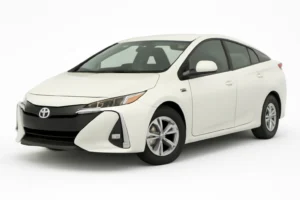
If you’re driving a Toyota Prius and that dreaded hybrid battery warning light comes on, your first thought is probably: “Can I keep going?” or “Will my car just stop on me?”
The short answer? It depends on your Prius model and the severity of the issue. Some cars limp along with reduced performance, while others may stop completely. Either way, ignoring the warning is risky. Left unchecked, a weak or failing battery can leave you stranded, increase repair complexity, and even shorten the life of your car.
After helping over 300,000 hybrid owners worldwide over 13 years, we’ve seen what happens when Prius drivers ignore battery warnings. Let me walk you through what those lights actually mean, what risks you’re taking, and how to handle the situation properly.
Cool winters and damp conditions common across the UK can trigger faults earlier than in warmer, drier regions. Manchester, Birmingham, and Scottish drivers often see battery issues manifest differently than those in drier climates.
Why You Shouldn’t Ignore Prius Battery Warnings
The hybrid battery is the heart of your Prius. It powers your electric motor, works hand in hand with the petrol engine, and is one of the main reasons the Prius is so efficient. When the car flashes a warning, it’s telling you something isn’t right. Ignoring it can lead to: Unexpected breakdowns: Sudden power loss is a real risk, potentially leaving you stranded on a motorway or during your commute. Reduced performance: Less acceleration, sluggish hill climbs, and diminished responsiveness that makes driving frustrating and potentially unsafe. Higher running costs: Fuel economy often drops dramatically as the petrol engine compensates for the failing battery, sometimes by 30-40% or more. Damage to other systems: The petrol engine and braking system can suffer additional wear when forced to work harder than designed. In short, the light is not just a suggestion. It’s your car’s way of protecting itself—and your wallet. If you’re already seeing the warning light, it’s smart to book a hybrid battery check right away with a trusted UK specialist like Greentec Auto UK.Understanding the Prius Hybrid Battery Warning System
The Prius is fitted with a sophisticated self-monitoring system. Using sensors and onboard computers, it constantly checks the health of your hybrid battery. When it detects an imbalance, overheating, or performance drop, it alerts you on the dashboard.Common Prius Warning Lights
Hybrid battery warning light: Signals an issue with the high-voltage battery pack, typically appearing as a red triangle with an exclamation mark and a car with “READY” crossed out. Check engine light: Can sometimes mean a hybrid battery problem, though it also points to other faults. When accompanied by reduced power, it often indicates battery issues. Battery charge or temperature lights: Appear if the battery is overworked, too hot, or not charging correctly. These require immediate attention. According to Toyota UK, these warning lights are designed to give you early notice before the car becomes unsafe to drive.How the Hybrid System Talks to You
Think of the warning lights as the car’s “symptoms.” Behind the scenes, the system may detect:- A voltage drop in one or more cells
- Rising internal resistance in the battery pack
- Cooling system problems
- Imbalanced charging between modules
What Happens if You Ignore the Warnings
Reduced Performance and Fuel Economy
At first, the most noticeable symptom is loss of efficiency. The petrol engine kicks in more often, and you’ll watch your fuel costs climb. You might also find your Prius feels sluggish, especially when merging onto motorways or driving uphill. One Leeds customer told us his fuel economy dropped from 58 mpg to 38 mpg over just three months after the warning light appeared. That’s hundreds of pounds wasted on extra fuel while the underlying problem worsened.Sudden Power Loss
In some cases, the car will enter “limp mode.” This safety feature limits speed and power to protect the system. You might find yourself unable to exceed 30-40 mph, making motorway driving dangerous or impossible. If things get worse, the car may refuse to start entirely—not fun if you’re stuck in a Tesco car park or on the M25 during rush hour. We’ve recovered countless Prius vehicles that went from “slightly concerning warning” to “completely dead” within weeks.Strain on Other Systems
A failing battery puts extra pressure on the internal combustion engine and braking system. The engine must run far more frequently and work harder to maintain performance, accelerating wear on components designed for intermittent use. The regenerative braking system also suffers. When the battery can’t accept charge, the friction brakes must do all the work, leading to premature brake wear and reduced braking efficiency. The longer you wait, the higher the risk—and the more complex the eventual repair. What starts as a manageable battery issue can cascade into multiple system failures.Long-Term Risks of Ignoring Prius Battery Warnings in the UK
Hybrid batteries naturally degrade over time, but ignoring problems speeds this process dramatically.Accelerated Degradation
Factors like deep discharge cycles, frequent stop-and-go traffic, and heat build-up during summer can accelerate wear. A study on hybrid vehicle maintenance found that balanced charging and routine inspections significantly extend battery life. When warnings are ignored, the battery management system can’t protect cells properly. Weak cells are forced to work beyond their capacity, creating a cascading failure where one bad cell damages neighboring cells. This turns a simple cell replacement into a full pack replacement necessity.UK-Specific Challenges
The British climate poses unique issues that Prius owners should understand:| Challenge | Impact on Battery |
| Damp conditions | Moisture can trigger electrical faults in connections and sensors |
| Temperature fluctuations | Rapid changes between cold mornings and milder afternoons stress cells |
| Winter cold | Reduced capacity and increased strain during cold starts |
| Summer humidity | Can affect cooling system efficiency and promote corrosion |